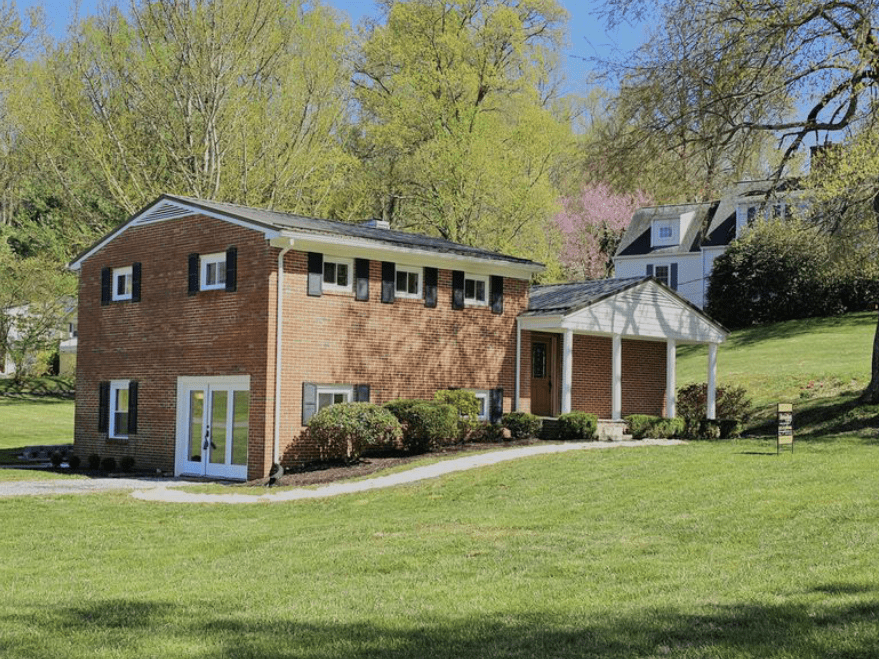
I just bought my first home a year ago (almost to the day!) and there were a lot of things I didn’t fully understand/know going into the process. Today I’m going to share some of those items with you, so you might be better prepared than I was!
In this post, we’ll review the following:
- Setting a budget
- Loan types/options available
- Finding a realtor
- Booking showings
- Putting in an offer / negotiations
- Getting an inspection
- Closing
Setting a Budget
There are so many websites already dedicated with detailed strategies to find your budget when house shopping (like the “50/30/20” rule, where 50% of income to needs, 30% to wants, and 20% for savings, etc.), and they all require a good deal of math.
What worked for me? I knew about how much I could spend per month based on the amount I was paying for rent. From there, when I got in touch with my lending bank (next step) I made sure that whatever they would preapprove me for, they told me what the monthly payment would be also. For example, when you determine the kind of loan you need and contact the bank telling them you want to be preapproved for a mortgage to begin making offers, they’ll give you the *total* amount that you’re preapproved for. You can then ask them to break that down to tell you your monthly payment estimate (ask them to estimate ESCROW and include interest/mortgage insurance if it’s required for your loan).
I don’t care how perfect the house is, if it’s outside your budget, DON’T DO IT! (Trust me, I almost did and I am SO relieved now that they declined that offer!)
Loan Types and Options
First thing you need to know to decide your loan type: do you have enough saved to do 10% down, like a traditional mortgage? If not, you’ll want to consider some of the following options:
If you’re looking to buy a home in a rural area, a USDA Rural Development Loan might be for you! They have options with 0% down and maintain the federal rate (typically lower than private loans that you can get from banks/credit unions). To see if the place you’re looking for a home qualifies, check their eligibility map, here. If your house is within the eligible area, I would suggest looking more into this loan.
If you don’t have 10% to put toward a home and you’re not in an eligible USDA loan area, well, neither was I. Which leaves private lenders that offer 0% down mortgages. These exist and are readily available all over the country, but the downside is they come with higher interest rates and typically private mortgage insurance (PMI) requirements. This was the route I went.
Finally, we have the traditional, 10%+ down payment option. This can be done with basically any bank or credit union. This will get you a better interest rate with this traditional loan than the 0% down loans, which means you’ll spend less money in the long run.
When you decide on your lender (bank, credit union, USDA-bank), you can begin the process to get preapproved. This is simple, and typically just requires some personal information from you to get started and a credit check. The bank will then send you a letter saying, “You are preapproved for up to $300,000,” or whatever you’re approved for.
Following the preapproval letter, I asked the bank to please let me know what the monthly payment would be for that approval with estimated ESCROW, PMI, and interest. Since most of us pay our bills monthly, this is a much more applicable/understandable breakdown of the mortgage.
If you get your monthly breakdown back and realize it’s too high for what you’re comfortable spending monthly, you can be upfront with the bank, tell them exactly what you’d be wanting to spend per month maximum, and they can revise the preapproval amount to let you know what the new total would be with that monthly payment.
Finding a Realtor
This is one of the easiest one on the list. Your parents know a realtor. Your coworkers know a realtor. Everyone knows a realtor, and most people will be forthcoming with their reviews of those realtors when it’s in a private setting. Ask around in your life, get some recommendations, and give the top realtors on your list a call, and pick the one you think would be the best fit.
Also, if you’re new to the house buying game, it’s important to know that you, as the buyer, pay NOTHING for a realtor. Their fees will all be covered by the seller if/when you buy a house. If you don’t buy a house, they don’t get any fee related to you.
Booking a Showing
So, you have your realtor, your preapproval letter and budget, and now you’ve found a house listing you like. If you have a texting relationship established with your realtor, just send them the listing via text. If you don’t text your realtor, give them a call and tell them the address of the place you want to see.
Your realtor SHOULD be very responsive. If you want to see a house, they should be getting you in to view it in *no longer* than a week, and ideally they’ll get you in that day or the following. If your realtor isn’t responding or getting you in to see houses in that timeframe, you might want to consider finding a new one.
Once you let your realtor know you’re interested in a place, they’ll let you know a day and time to meet them there. At the showing they should point out things that you might miss on your own (obvious water damage on the ceiling, the type of counters in the kitchen, year the house was built, etc.). If your realtor is taking a backseat and not helping you review the house you’re seeing, they might not be the best fit to help you find your place going forward. Unless you sign a contract with the realtor (or typically send an offer through the realtor) you’re free to move to another.
If this isn’t the house for you, no worries. Tell your realtor thank you, but you’re going to keep looking. Send them as many listing as you want to see – they really don’t mind, they want you to buy a house too! It’s how they end up getting paid.
Putting in an Offer and Negotiations
So you found the house! Time to put in an offer. Depending on the market in your area, the cost of the house compared to your budget, and how much you love it will all effect your offer. Personally, I put in 6 offers on different houses before finally getting the house I’m in.
Tell your realtor you want to put in an offer. They should advise you on if they think you should be aggressive (come in higher) or conservative (lower offer) based on how long the house has been on the market, if they know there are already other offers, what similar houses in the area have been going for, etc. In the end though, it’s YOUR decision what your offer is. If you are obsessed with the house and you want to be sure you win it, you can go higher. Alternatively, if your realtor says it’s the perfect house and going to go fast but you’re not sold on it, you can always go $10, $20k below asking.
Personally for my house, I went $10k below asking and asked the seller to pay closing costs; I also made it contingent on a home inspection. The seller accepted all terms and only asked that I pay a $1,000 earnest money deposit (this goes to the closing law firm you will use, and counts toward your mortgage, you only pay it if the offer is accepted and it’s just ‘holding’ your offer until closing, when it’s applied to your mortgage). Regardless of how you price your offer, I would suggest adding the language “contingent on a home inspection” to your offer. For previous offers on other houses (that got declined) I input offers at asking price, offers over asking, and offers at asking requesting for seller to pay closing – it all just depends on the seller and what they’re willing to move on the price and their other offers.
Once you tell your realtor the price you want to offer, they’ll start on the paperwork and you need to call your bank and have them revise your preapproval letter for the value you’re sending the offer in for (for example, if you were approved for $300k but want to offer $250k, you’ll want the letter to say $250k so the seller doesn’t see that you have ability to go above that).
Forward the new letter to your realtor and they’ll send you over a PDF for your signature. Review this document carefully. I had one offer that the realtor forgot the house was 2 parcels (lots of land) and only included 1 tax ID number, and one offer that they wrote the wrong value of my offer in. If any edits are made, send them an email telling them and do not sign the document.
This is a good place to note that most realtors will include in the offer agreement a realtor agreement, saying that if you purchase a house over the next 6 or so months, they get 3% of closing costs. So when you put in an offer is usually when there’s no turning back with the realtor.
Once you’ve reviewed and are good with the offer, send it back signed and wait! Usually the seller has 24 hours to accept, decline, or counter. If they counter, you can counter and the cycle can continue until one person finally accepts or one party walks away.
If they decline the offer, start back at the viewing step. If they accept, congratulations & move onto the next section!
Home Inspection, Assessment, and Loan
Once the seller has accepted your offer, it’s your responsibility to get a home assessment and inspection. For the assessment (where a professional determines the value of the house and land), I was able to get this completed through my bank, and that’s been the case for all my friends that I’ve asked as well (and we all use different banks). So call your bank (you should have a contact who’s been getting you preapproval letters) and let them know the offer was accepted. Your realtor will forward them the signed offer. Tell the bank you’d like the home assessment completed by them (this was approximately $150 at my bank).
For a home inspection, this is something you’ll want to ask around and get suggestions on. Ask family, coworkers, etc. who they used and if they did a good job. I was able to get a reputable inspector to complete the inspection within 2 weeks of the offer being approved (cost $425 for inspection). Review the inspection, if anything is negative on it, it’s the seller’s responsibility to fix. There’s a chance they’ll fix whatever it is with no hesitation/push back, but if they say, “we’re not going to fix that,” then you legally have the right to withdraw your offer if you made the offer contingent on passing a home inspection.
My seller fixed my AC unit (which was bad on the inspection) and after the repair the inspector went back to the house, inspected, and revised the inspection report (this cost me $0, but I wouldn’t count on re-inspections typically being free).
Alternatively, my brother and sister-in-law just bought a house; the inspection report said the roof was bad, but the seller refused to fix it and told them if they wanted to back out of the sale they could. They chose to go through with the purchase of the house and repaired the roof on their own.
The loan. You’ll be asked to give everything but a blood sample from your loaning agency (bank, credit union, etc.). No joke, there’s a lot of paperwork including, paystubs, W2s for 2 years, consumer info sheet, account statements for all your financial holdings, and proof of inspection, insurance, and earnest money deposit (if necessary).
Closing on the House
The easiest step of all! Show up on the day and time your realtor tells you to at the closing firm. They’ll set you in front of a stack of papers, all of which have been discussed in the month/2 months before this day with you and the bank, and you sign and sign and sign. Once you’re done, congratulations! You’ve bought your first house!
Disclaimer
This is all based off of my personal house-buying experience and I am not a professional realtor. Any advice in this column is just to provide general insight to the house buying process, since it can be confusing and hard when you’ve never done it before. I hope it’s helped you and best of luck finding your perfect house!




 Precision & Petals: A Lifestyle Blog
Leave a comment